A hub article and four follow-ups for owners who manage their own rentals. Each follow-up covers one step of the hub's checklist.
Denver-metro apartment vacancy reached 7.6% at the end of 2025, a 16-year high. That’s an apartment number. Single-family rentals in the metro are estimated closer to 4%, and apartments around Fort Collins ran 4.7% in mid-2026. The number that matters is how long a property like yours normally takes to lease, and how far past that you are.
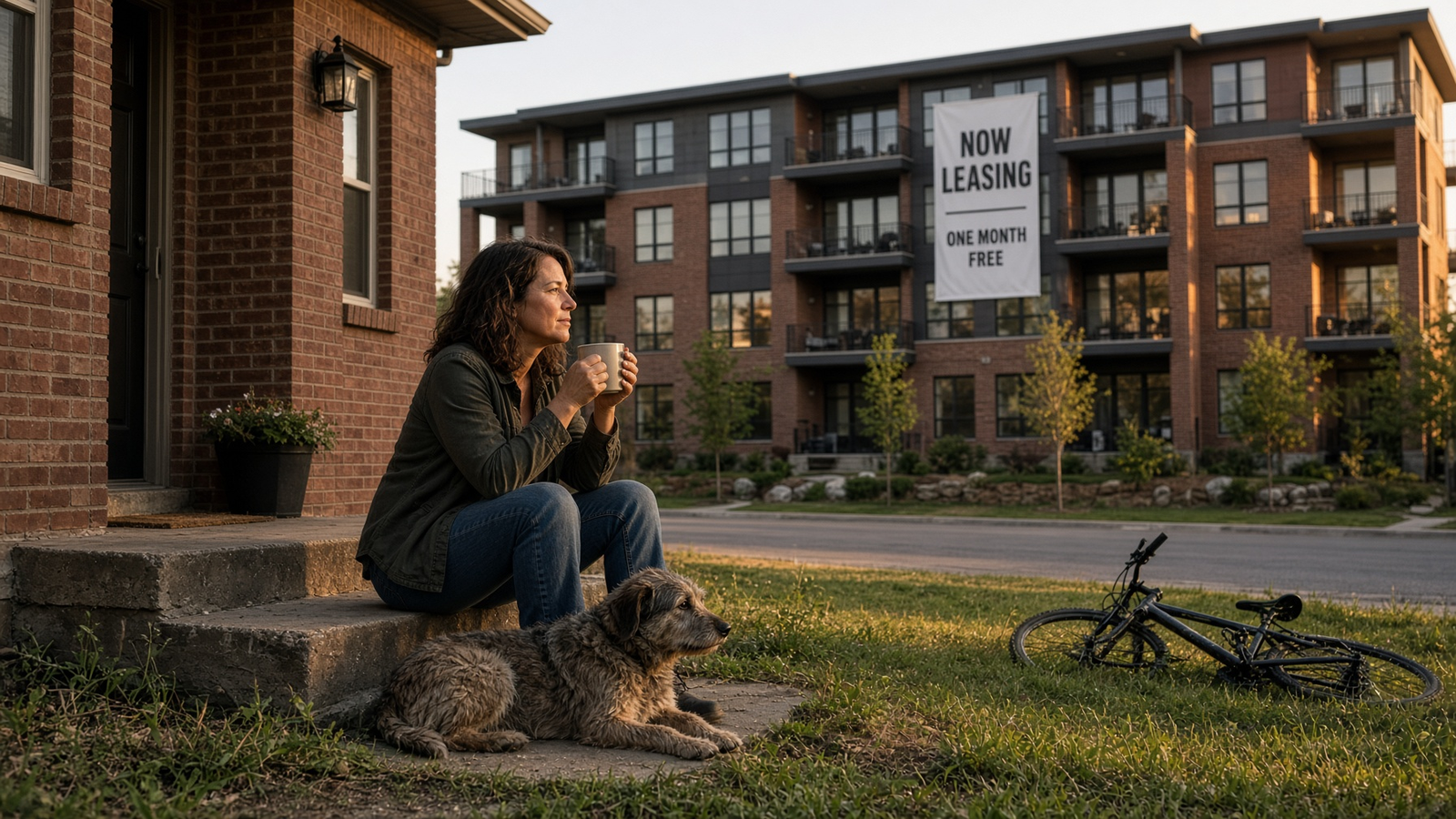
Picture three properties: a two-bedroom a few blocks from Colorado State University, a unit in a new downtown Denver high-rise, and a house in Westminster rented to a family planning to stay for years. All three can look up “Colorado vacancy rate” and find the same figure. For at least two of them it describes someone else’s competition.
Why the headline is so high
Mostly because of how much was built. Since 2021 the Denver metro has completed roughly 70,000 apartments, an 18% increase in total inventory, according to the Apartment Association of Metro Denver. Some of it came in clusters: in August 2022, 771 units were under construction within five blocks of one intersection in Denver’s Central Park neighborhood, with about 40,000 under way across the metro and 71,000 more in planning.
Demand didn’t keep pace. Colorado grew only 0.4% in the year to July 2025, its slowest since 1989, and for the first time since 2004 more people left for other states than arrived from them, about 12,100 more. New apartments arrived just as growth slowed.
That is the market a downtown high-rise competes in. Older buildings feel it too: the association found vacancy in 1970s-era buildings at 8.6% in the second quarter of 2025, up from 3.9% three years earlier, and buildings with fewer than 100 units at 6.8%. By the end of 2025, buildings from the 1970s and earlier stood at 8.4%.
Check this: If you own an apartment, look for the Apartment Association of Metro Denver’s figures by building age and size, which appear in its quarterly reports and in news coverage, not only the metro total.
Vacancy by type of property
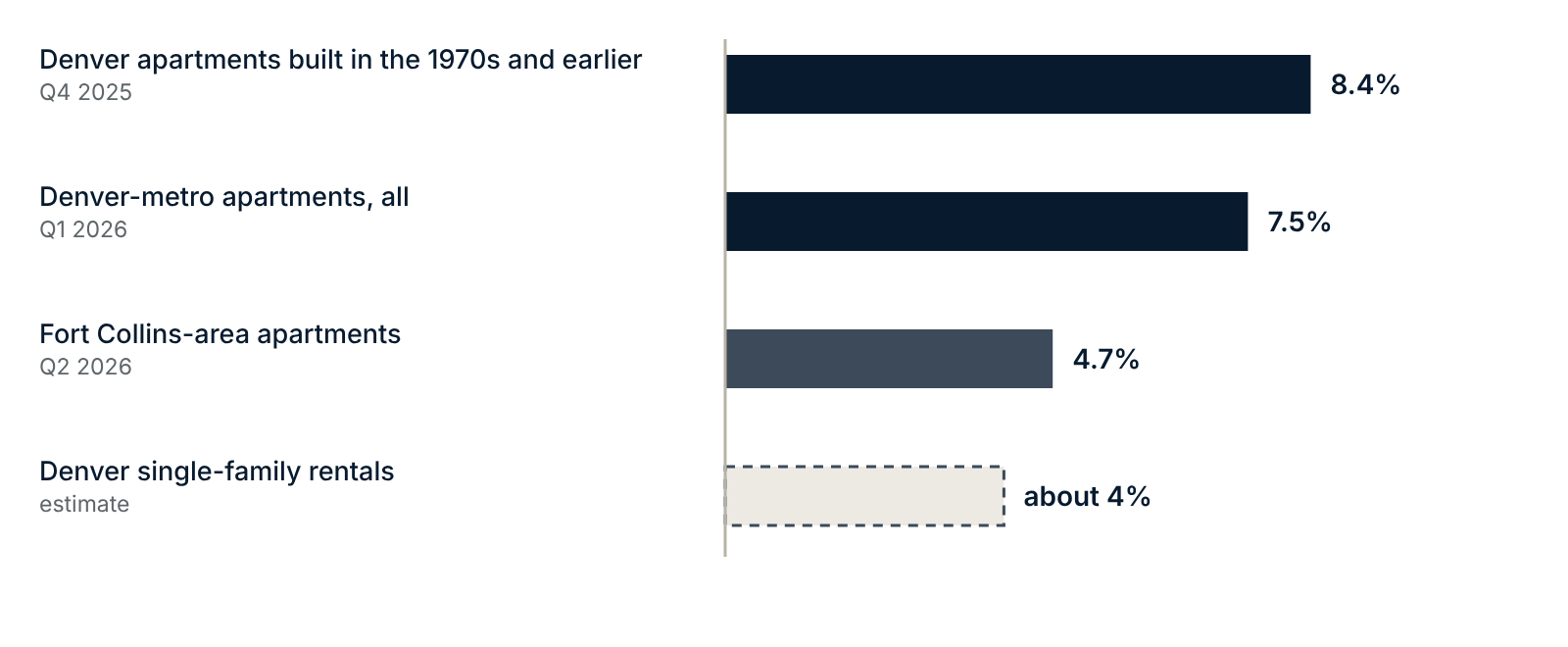
One vacancy number, very different markets. Sources: Apartment Association of Metro Denver figures via the Colorado Sun (Q4 2025) and the Denver Gazette (Q1 2026); CHFA Colorado Statewide Apartment Survey, Fort Collins market (Q2 2026); the single-family figure is an estimate from two Denver property-management firms. Periods differ by bar.
Segment
Vacancy
Period
Denver apartments built in the 1970s and earlier
8.4%
Q4 2025
Denver-metro apartments, all
7.5%
Q1 2026
Fort Collins-area apartments
4.7%
Q2 2026
Denver single-family rentals
about 4%
estimate
Single-family houses in the Denver metro: roughly 4%, an estimate from two Denver property-management firms; neither publishes the underlying data. This steadier segment isn’t absorbing the apartment surplus. For the Westminster house, it’s a far better guide than the headline.
Apartments around Fort Collins: 4.7% in the second quarter of 2026, according to the Colorado Housing and Finance Authority’s statewide survey, down from the quarter before. The Denver association’s survey covers only the Denver metro; the state survey covers the rest of Colorado outside the seven-county Denver/Boulder metro. Neither breaks out Windsor; it falls within the state survey’s Fort Collins and Greeley markets.
Student rentals near Colorado State University: no current published figure. HUD put vacancy in off-campus student apartments at 4.8% in mid-2024, and we found nothing published for the houses and small buildings near campus. The calendar is clearer: the university advises students to sign leases between January and April, and many leases begin in August. A student rental still unleased in June has probably missed most of its season; a family house unleased in June is on schedule.
Newer apartment complexes in the Denver metro: the headline, 7.5% in early 2026, covers all metro apartments, but it describes the market a newer complex competes in, alongside the many buildings finished since 2021.
Look at how long active listings like yours have been on the market right now on Zillow or Apartments.com: same city, same property type.
If you have your own leasing history, your past time to lease is a better predictor than any regional average.
If your property follows its own calendar, as rentals in a university market do, measure against that calendar.
Check this: Write down your property’s normal time to lease for this month. Judge your current vacancy against that number.
A high regional vacancy rate is worth knowing. But it isn’t a verdict on your property. Once you know which segment you compete in and how long similar properties take to lease, you can tell whether the vacancy is the market or something specific to your listing.
Broker and co-founder, Urban Forest Property Management
John Runkles is a broker and co-founder of Urban Forest Property Management and co-owner of Urban Forest Realty in Fort Collins. He manages rental homes in Northern Colorado and the north Denver suburbs, and writes about pricing, vacancy and what an owner can check for themselves.
This article is general information for rental owners and residents in Colorado, not legal advice. Laws and local rules change; check the "Reviewed" date above and confirm current requirements with an attorney before acting. Urban Forest Property Management LLC · Colorado real estate brokerage · License EC.100111715.
.svg)